Attic Insulation Cost in Bothell, WA
Attic insulation cost in Bothell depends mainly on your attic's square footage, the material you choose, how much old insulation has to come out, and how much air sealing the attic needs first. This page explains each of those factors, what national price guides do and don't tell you, and how we turn a free attic inspection into a written quote for your specific home.
We are Bothell Insulation Pros. We install, remove and replace attic insulation in Bothell, WA. We don't publish one-size-fits-all prices because two attics of the same size can need very different work. What we can do is show you exactly what moves the number up or down, so the quote you get from us or anyone else makes sense.
How much does attic insulation cost in Bothell, Wa?
A Bothell attic insulation job is priced from measurements and conditions, not a flat rate, so the only reliable figure is a written quote after someone looks in your attic. Online cost guides give national ranges that run from a modest top-up to several times that amount. The spread is that wide because the guides mix small attics with large ones, cheap blown-in loose fill with spray foam, and clean attics with ones that need full removal.
Several local conditions affect pricing here:
- Older homes in Bothell often have settled, thin insulation, so many jobs are top-ups.
- Our damp marine climate makes moisture, vent blockages and occasional rodent contamination common findings.
- Low-pitch roofs and attic hatches tucked into closets slow the work down and add labor.
To see where your home falls, it helps to know how the national "average" prices are built.
What is the average price of attic insulation?
The average price of attic insulation is a national midpoint. It blends very different jobs, so treat it as a rough orientation, not a budget for your house. Most published averages assume a professionally installed blown-in or batt job in a typical single-family attic with no removal. That is the low-to-middle part of the market.
Averages leave out several common costs:
- Removing contaminated or wet insulation.
- Air sealing top plates, wiring holes and can lights.
- Installing rafter baffles.
- Insulating and weatherstripping the attic hatch.
- Working in a hard-to-reach attic.
Spray foam averages are much higher and are usually listed separately. Because material choice drives so much of the difference, the clearest comparison is cost per square foot by material.
Free, no-obligation estimates
Talk to Bothell Insulation Pros
Tell us what you need and we’ll take it from there.
At a glance
Attic insulation cost per square foot by material
Blown-in cellulose and blown-in fiberglass usually have the lowest attic insulation cost per square foot, fiberglass batts are similar, and spray foam costs the most. The table below shows relative cost tiers from general industry pricing. It is not a quote from Bothell Insulation Pros.
| Material | Relative cost per sq. ft. (general, not a quote) | Approx. R-value per inch | Best fit |
|---|---|---|---|
| Blown-in cellulose | Low | About R-3.2 to R-3.8 | Topping up open attic floors; fills gaps around framing well |
| Blown-in fiberglass | Low to moderate | About R-2.2 to R-2.9 | Open attic floors; doesn't absorb moisture |
| Fiberglass batts | Low to moderate | About R-2.9 to R-3.8 | Accessible attics with regular joist spacing |
| Spray foam (open or closed cell) | Highest | About R-3.5 (open) to R-6.5 (closed) | Roof-deck insulation, conditioned attics, heavy air sealing needs |
For deeper material-specific pricing, see our pages on blown-in insulation cost and spray foam insulation cost, or the overview of insulation cost in Bothell. Per-square-foot rates are easier to grasp when you apply them to a real attic, so let's walk through one.
How much does it cost to insulate a 2000 sq ft attic?
A 2,000 sq ft attic is a mid-to-large job. Its cost depends mostly on how many inches of material are needed to reach the target R-value and whether any removal or air sealing comes first. Here is a worked example using ranges instead of dollar amounts.
Worked example: 2,000 sq ft Bothell attic
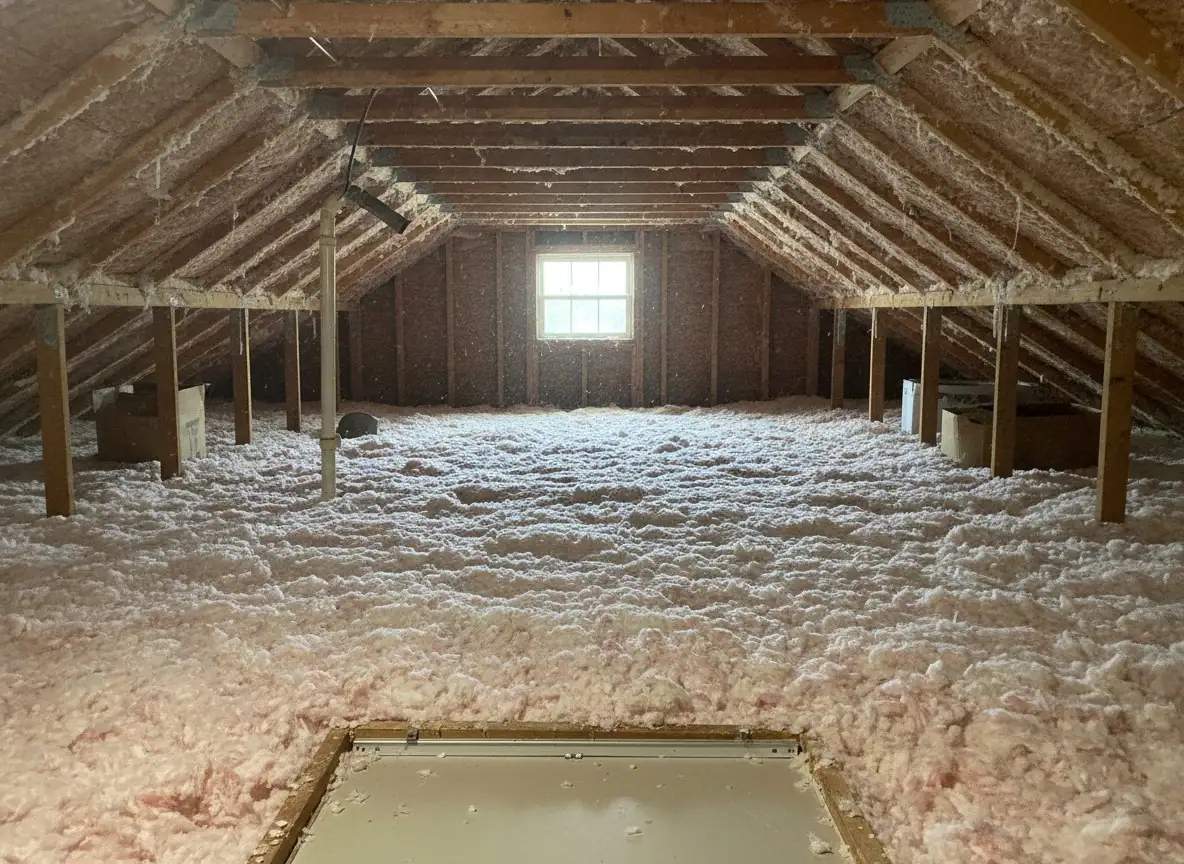
- Starting point. The existing insulation is about 4 to 6 inches of settled fiberglass, roughly R-11 to R-19.
- Target. ENERGY STAR guidance for our climate zone is about R-49 to R-60, so the attic needs roughly R-30 to R-45 added.
- Material quantity. With blown-in cellulose, that is about 9 to 13 more inches across all 2,000 sq ft. With blown-in fiberglass, it is about 11 to 17 inches, because fiberglass has a lower R-value per inch.
- Labor. A clean, walkable attic is usually a single-day blow-in. Removal, air sealing or tight access can add a day or more.
- Price tiers. A top-up with no removal sits at the low end. Adding air sealing and baffles puts it in the middle. Full tear-off plus new insulation is the high end. Converting the attic with roof-deck spray foam is highest of all.
The same 2,000 sq ft attic can land in very different tiers, and the next section explains why.
At a glance
What factors change attic insulation cost?
Attic insulation installation cost changes with size, material, access, the condition of the existing insulation, and the prep work needed. These are the factors we measure during an inspection:
| Cost factor | Lowers cost when | Raises cost when |
|---|---|---|
| Attic size | Small, simple footprint | Large area, multiple attic sections |
| Material | Blown-in cellulose or fiberglass | Spray foam, especially closed cell |
| Target R-value / depth | Existing insulation is decent and only needs a top-up | Starting from little or none |
| Roof pitch and access | Walkable height, convenient hatch | Low pitch, tight eaves, closet hatch, kneewalls |
| Old insulation condition | Dry and clean, can stay | Wet, moldy, rodent-contaminated or vermiculite (needs testing) |
| Air sealing needs | Few penetrations | Many can lights, open chases, unsealed top plates |
| Ventilation fixes | Soffit vents clear | Baffles needed, blocked soffits |
| Permits and code items | Not required for the scope | Required by the scope of work |
| Damage extent | None found | Leak, pest or fire damage needing repair first |
Some of these items appear on a quote as separate line items, and those extras deserve a closer look.
At a glance
Extra costs: old insulation removal, air sealing and baffles
The three most common add-ons to an attic insulation estimate are removal of old insulation, air sealing, and baffles. Each solves a real problem rather than padding the bill.
| Extra | What it involves | What raises its cost (general, not a quote) |
|---|---|---|
| Old insulation removal | Vacuuming loose fill or bagging batts, then hauling it away | Rodent droppings, mold, debris, large area, poor access |
| Air sealing | Sealing top plates, wiring and plumbing holes, chases and the hatch with foam or caulk | Number of penetrations, recessed lights, open chases |
| Baffles (rafter vents) | Installed at each rafter bay over the soffits to keep vent air flowing | Number of rafter bays, tight eaves |
Our page on insulation removal cost covers tear-off in more detail. Once the attic is prepped, the next choice is the material itself.
Which is better, attic insulation blown or rolled?
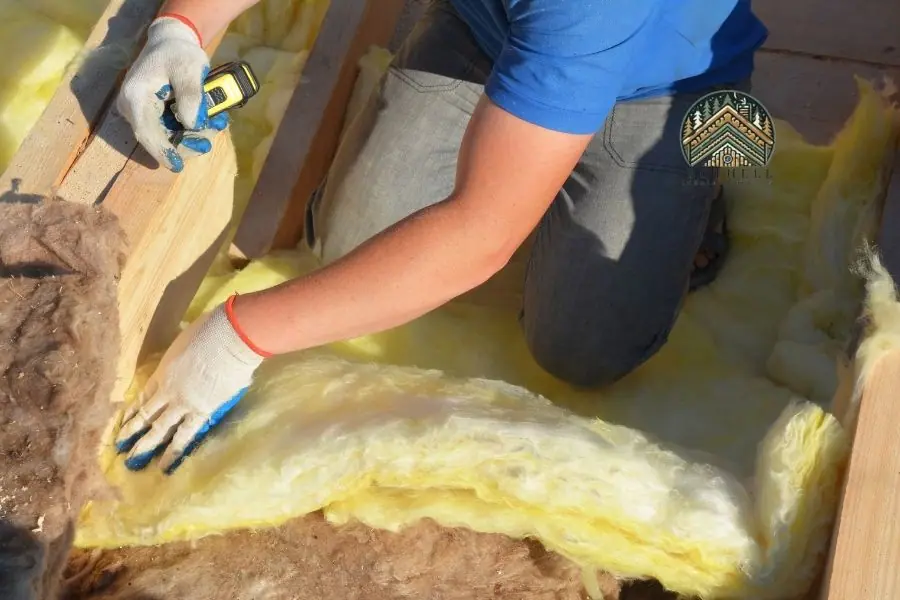
For most open attic floors, blown-in insulation is better than rolled batts. It fills around joists, wiring and blocking without gaps, and it reaches high R-values quickly. Batts can work well in tidy attics with standard joist spacing, but every compressed corner or gap lowers their real-world performance.
- Choose blown-in for top-ups, irregular framing, lots of wiring, or when you are aiming for R-49 or more.
- Choose batts for open, regular bays where careful fitting is easy, or if you may need frequent access for storage.
- Consider spray foam when you want an air-sealed roof deck, or when HVAC equipment sits in the attic.
Whichever you choose, the existing layer underneath matters, which leads to the removal question.
Should I remove old attic insulation before adding new?
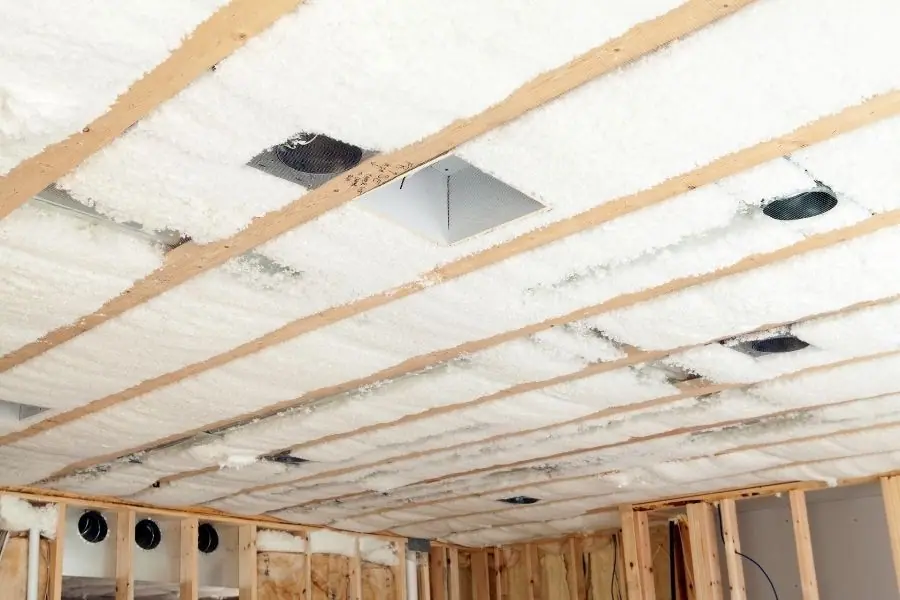
You only need to remove old attic insulation if it is wet, moldy, contaminated by rodents, smoke-damaged, or possibly vermiculite. Dry, clean insulation can usually stay, and new material goes on top of it. Keeping sound insulation is the main reason the cost to add insulation to an attic is often lower than a full replacement.
Removal makes sense in these cases:
- Droppings, nesting or odor are present.
- There are water stains or mold from past roof leaks.
- The attic needs thorough air sealing, which is hard to do through old material.
- The insulation looks like vermiculite (gray-brown and pebbly). It should be tested before anyone disturbs it.
We offer both insulation removal and insulation replacement. Some homeowners skip the pros entirely, though, so it's worth asking whether DIY makes sense.
At a glance
Can I install attic insulation myself?
Yes, you can blow in or lay attic insulation yourself if the attic is safe, dry and easy to reach. DIY saves on labor, but material and blower rental still add up, and mistakes are costly.
| DIY | Professional | |
|---|---|---|
| Upfront cost | Lower (materials plus machine rental) | Higher (includes labor and equipment) |
| Air sealing and baffles | Often skipped | Typically included in the scope |
| Even depth / R-value | Hard to achieve consistently | Measured to target |
| Hazard checks | Easy to miss vermiculite, wiring or mold | Identified during inspection |
| Time | One or more weekends, usually with two people | Usually one day for a straightforward job |
| Spray foam | Not practical | Professional equipment required |
DIY or not, most people want to know whether the spending pays off.
Is insulating your attic worth it?
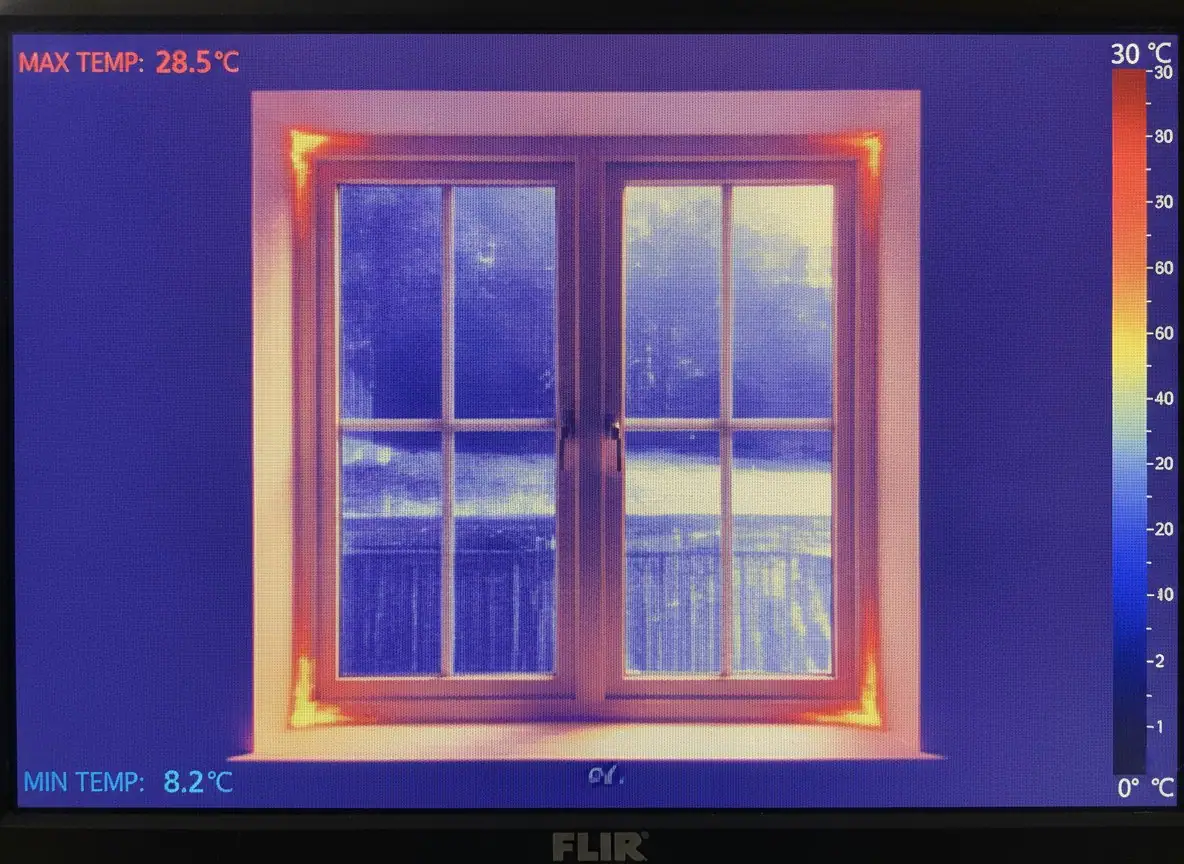
Yes, for most under-insulated homes. The attic is where heated air escapes fastest, so bringing it up to the recommended R-value is one of the more practical efficiency upgrades. In Bothell's long, damp heating season, a well-insulated and air-sealed attic means:
- Steadier upstairs temperatures.
- Less furnace or heat pump runtime.
- Fewer warm-air leaks that can cause attic condensation.
It is worth the most when you start with less than about R-30, or when the attic has obvious air leaks. You may have seen a "rule" about attics online, so let's address it.
What is the 7 and 7 rule for attics?
We could not confirm the "7 and 7 rule" in building codes, ENERGY STAR guidance or the Department of Energy's insulation resources. We don't recommend planning around it. Instead, we rely on standards that can be verified:
- The residential code's attic ventilation ratio of 1 sq ft of net free vent area per 150 sq ft of attic floor, or 1 per 300 when certain conditions are met.
- ENERGY STAR R-value recommendations for our climate zone.
- The current Washington State Energy Code requirements, which we check against your scope of work.
With real standards setting the scope, the remaining question is how to pay for it.
Does insurance or financing help with attic insulation cost?
Homeowners insurance generally doesn't pay for an efficiency upgrade. It may cover insulation replacement when a covered event damages it, such as a roof leak or fire, depending on your policy. We help homeowners with insurance claims by documenting attic damage and the scope of replacement.
For upgrades, financing is available to spread out the cost. We can explain the options during your estimate. It is also worth checking with your electric or gas utility about any current insulation rebates. All of this starts with an accurate estimate.
Get a free attic insulation estimate
We provide free attic inspections and a written attic insulation estimate, so you know the actual price before any work begins. During the visit we:
- Measure the attic square footage.
- Check existing depth and R-value.
- Look for moisture, pests and vermiculite.
- Note air leaks, ventilation and baffle needs.
- Review the access and roof pitch.
You'll get material options with a clear scope for each. Call (425) 528-8317 or use our contact page. We also offer 24/7 emergency service when attic damage can't wait. If your project includes the area under the house, see our crawl space insulation cost guide.
FAQ
Frequently asked questions
How much does it cost to add insulation to an existing attic?
Adding insulation on top of dry, clean existing material is usually the least expensive kind of attic job, because there is no removal. The price depends on how many inches you need to reach the target R-value and on your attic's size. We confirm both during a free inspection.
How much does it cost to insulate a 1200 or 1500 sq ft attic?
A smaller attic needs less material and less labor, so it generally costs less than a 2,000 sq ft attic with the same material and conditions. Access, removal and air sealing can still shift the price noticeably. A written quote is the only reliable number.
What R-value should a Bothell attic have?
ENERGY STAR guidance for our climate zone recommends about R-49 to R-60 in the attic. That is roughly 14 to 17 inches of blown cellulose, or more if you use blown fiberglass.
How long does attic insulation last?
Dry, undisturbed fiberglass, cellulose and spray foam can last for decades. Moisture, rodents and settling are what shorten its useful life.
What time of year is attic insulation cheapest?
Material prices don't usually swing much by season. Scheduling tends to be easier outside the first cold snaps of fall, though. Mild weather also makes attic work more comfortable and lets air sealing products cure well.
Do you give written attic insulation estimates?
Yes. After a free attic inspection, we provide a written estimate that lists the materials, target R-value and any removal, air sealing or baffle work.
Ready to find out what your attic actually needs? Call Bothell Insulation Pros at (425) 528-8317 for a free inspection.
Why choose us
Why choose Bothell Insulation Pros?
Free estimates
Get a clear, no-obligation estimate before any work begins.
Licensed & insured
Your property and our crew are protected on every project.
Residential & commercial
One team for homes, multi-family and commercial properties.
Locally owned & operated
A local team serving your community and the surrounding area.
Get in touch
Find insulation help near you
Request a free estimate online or give us a call — our team will follow up quickly.
- Call us(425) 528-8317
- Visit19125 N Creek Pkwy Ste 120 A, Bothell, WA 98011
- HoursMon-Sun: 7:00 am – 7:00 pm