
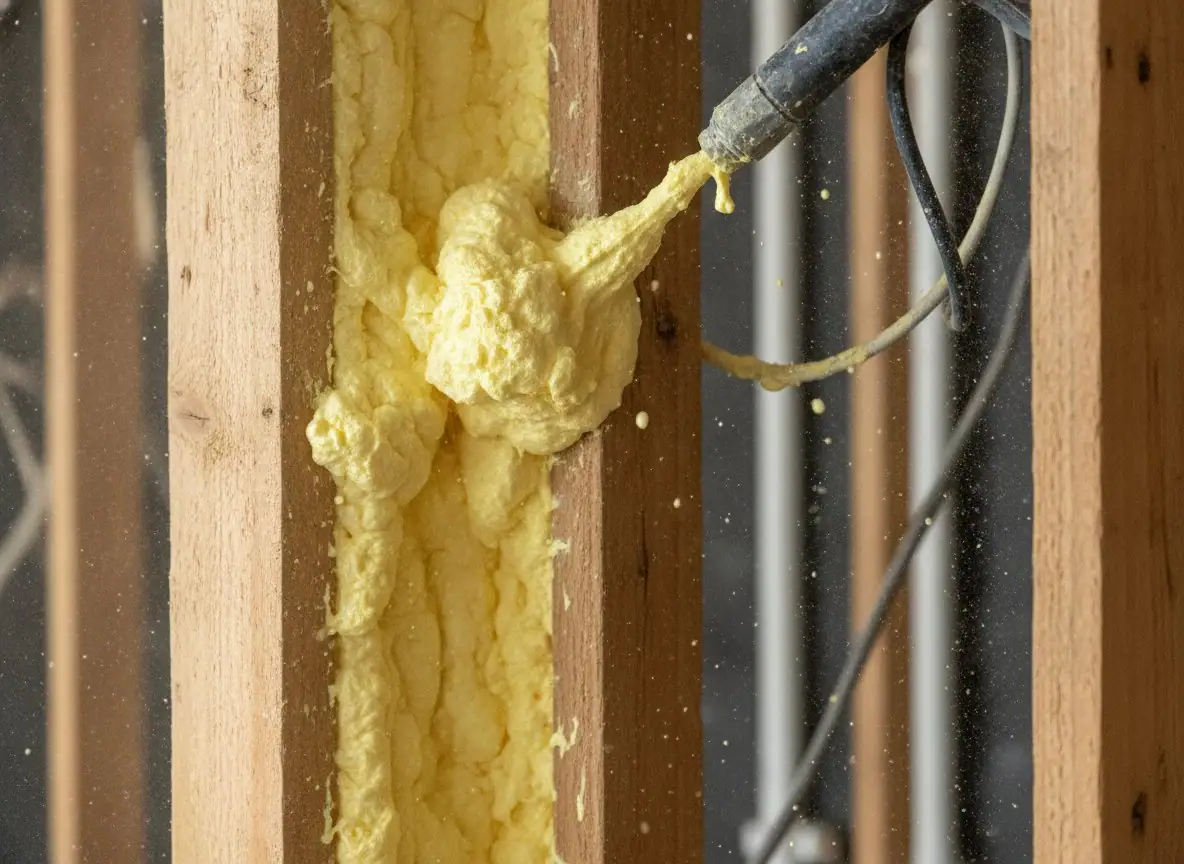
Spray Foam Insulation Cost in Bothell, WA
Spray foam insulation cost in Bothell depends on the area you are insulating, the foam type, how thick it goes on, and how much prep the space needs before anyone starts spraying. This page explains how spray foam is priced, how open cell and closed cell compare, and what an attic, a whole house, or a 20x20 garage typically involves.
We do not publish flat prices because two homes of the same size can need very different amounts of foam. Bothell Insulation Pros provides a free inspection and a written quote based on your actual measurements. For other materials, see our overview of insulation cost in Bothell.
How much does spray foam insulation cost in Bothell, Wa?
Spray foam in Bothell is priced by the volume of foam installed, measured in board feet, plus labor, prep, and access. One board foot is one square foot of foam at one inch thick. A wall cavity sprayed to 3 inches uses three times the material of one sprayed to 1 inch, even though both cover the same square footage.
Local conditions also matter. Bothell's marine climate brings long, damp heating seasons, so many homeowners want air sealing and moisture control as well as R-value. That pushes some projects toward closed cell foam, which costs more per inch. Older homes often need old insulation removed or framing cleaned before foam can bond. Newer construction with open framing is usually simpler to spray.
Spray foam costs more upfront than most alternatives. The more useful question is what a typical project adds up to.
What's the average price for spray foam insulation?
There is no single average spray foam price that fits Bothell homes, because "average" mixes small rim-joist jobs with full roof decks. A national average can mislead you when your attic is twice the size of the sample or your walls need closed cell instead of open cell.
A more reliable way to estimate is to break your project into three parts:
- Material: total board feet, which is square footage multiplied by thickness in inches, for the foam type chosen.
- Labor and equipment: setup, spraying, trimming excess foam, and cleanup. Small jobs carry a larger share of fixed setup cost.
- Prep and extras: removing old insulation, masking, sealing penetrations, and any required thermal or ignition barrier.
Once you know the square footage and depth, the per-unit price becomes the starting point.
Free, no-obligation estimates
Talk to Bothell Insulation Pros
Tell us what you need and we’ll take it from there.
How much is spray foam insulation per square foot?
The price per square foot of spray foam depends mainly on thickness and foam type. Square footage alone does not tell you much. Contractors price by board foot because a square foot of foam can be 1 inch thick or 6 inches thick.
To convert, multiply the area by the planned depth. Here are common targets:
- 2x4 wall, open cell: about 3.5 inches to fill the cavity, so roughly 3.5 board feet per square foot.
- 2x4 wall, closed cell: often 2 to 3 inches, so 2 to 3 board feet per square foot.
- 2x6 wall, open cell: about 5.5 inches, so roughly 5.5 board feet per square foot.
- Roof deck, open cell: often 5.5 to 8 inches or more, depending on rafter depth and the R-value target.
- Rim joists, closed cell: commonly 2 to 3 inches.
Closed cell foam usually costs more per board foot, but it delivers more R-value per inch. Comparing the two directly is the clearest way to see the tradeoff.
At a glance
Closed cell vs open cell spray foam cost
Closed cell spray foam costs more per board foot and per square foot than open cell, but it insulates better per inch and resists moisture. Open cell is usually the lower-cost way to fill deep cavities and seal air leaks. The values below are typical industry figures. Actual performance depends on the product used.
| Factor | Open cell spray foam | Closed cell spray foam |
|---|---|---|
| Relative material cost | Lower per board foot | Higher per board foot |
| Typical R-value per inch | About R-3.5 to R-3.8 | About R-6 to R-7 |
| Density | Light, soft, spongy | Dense and rigid |
| Air sealing | Yes, at full depth | Yes, at lower thickness |
| Vapor control | Vapor permeable | Acts as a vapor retarder at around 1.5 to 2 inches |
| Water resistance | Absorbs water | Resists water |
| Structural benefit | None | Adds some rigidity |
| Sound dampening | Better | Moderate |
| Best fit | Interior walls, roof decks, deep cavities | Rim joists, crawl spaces, garages, below-grade walls, thin cavities needing high R-value |
Use these decision rules:
- Choose closed cell where moisture or limited cavity depth is the main concern.
- Choose open cell where you have depth to fill and air sealing is the priority.
Many Bothell projects use both, such as closed cell on rim joists and open cell in the attic. Mixing foam types this way is common on whole-house jobs.
How much to spray foam a 2000 sq ft house?
The cost to spray foam a 2,000 sq ft house depends on how much surface area actually gets foam, and that is usually much more than 2,000 square feet. Floor area is not the same as insulated area. A whole-house project can include exterior walls, the attic floor or roof deck, rim joists, and sometimes the crawl space.
The ranges below are rough examples for a 2,000 sq ft two-story home. They are not quotes:
- Exterior walls: roughly 1,600 to 2,200 sq ft of wall area after windows and doors are subtracted. With open cell in 2x6 walls, that is about 8,800 to 12,100 board feet.
- Roof deck (unvented attic): roughly 1,100 to 1,500 sq ft depending on pitch and overhangs. At 6 to 8 inches of open cell, that is about 6,600 to 12,000 board feet.
- Rim joists: roughly 150 to 250 sq ft. At 2 to 3 inches of closed cell, that is about 300 to 750 board feet.
Spray foam for walls is most practical during new construction, additions, or remodels with open framing. In finished homes, the attic is often where spray foam pays off first.
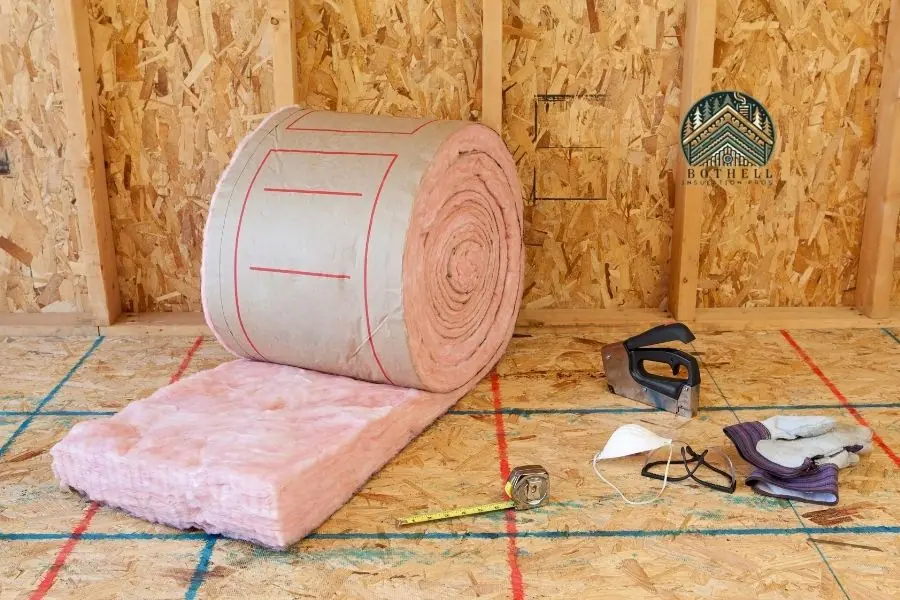
How much does it cost to spray foam an attic?
The cost to spray foam an attic depends on whether you foam the roof deck to create an unvented attic or foam the attic floor. Each approach needs a different amount of foam. Spraying the underside of the roof deck usually covers more area than the floor because of the roof pitch, but it brings ductwork and equipment inside the conditioned space.
Example attic ranges, not quotes:
- Roof deck, 1,000 sq ft footprint, moderate pitch: about 1,150 to 1,400 sq ft of roof surface. At 6 to 8 inches of open cell, that is roughly 6,900 to 11,200 board feet.
- Same roof deck in closed cell: at 3 to 4 inches, roughly 3,450 to 5,600 board feet. That is fewer board feet, but at a higher unit price.
- Attic floor only: roughly 1,000 sq ft. This area is often better served by blown-in insulation over air-sealed top plates.
Read moreShow less
Attic foam costs rise with steep pitches, tight access, and old insulation or debris that must be removed first. Learn more on our attic insulation cost page and our attic insulation service page. Garages raise a different set of questions.
How much does it cost to spray foam a 20x20 garage?
A 20x20 garage is 400 sq ft of floor, but the cost to spray foam it depends on the walls and ceiling. Those surfaces usually add up to 800 to 1,200 sq ft or more. Detached and attached garages are also handled differently. In an attached garage, the most important surfaces are the shared wall and the ceiling under any living space above.
Example 20x20 garage ranges, not quotes:
- Walls: 80 linear feet at 8 to 9 ft tall is 640 to 720 sq ft gross, or roughly 500 to 600 sq ft after the overhead door. At 2 to 3 inches of closed cell, that is about 1,000 to 1,800 board feet.
- Ceiling: roughly 400 sq ft. At 2 to 3 inches of closed cell, that is about 800 to 1,200 board feet. With open cell at full joist depth, the board feet are higher but the unit cost is lower.
Read moreShow less
Closed cell is common in garages because it resists moisture and adds rigidity. Garages often require a thermal barrier such as drywall over the foam, which adds to the project cost. See our garage insulation page for details. Many homeowners comparing these numbers end up asking whether foam is worth it at all.
At a glance
Is it cheaper to spray foam or install insulation?
Traditional insulation such as fiberglass batts or blown-in cellulose and fiberglass is cheaper to install than spray foam in nearly every case. Spray foam costs more because it insulates and air seals in one step.
| Factor | Spray foam | Batt insulation | Blown-in insulation |
|---|---|---|---|
| Relative upfront cost | Highest | Low | Low to moderate |
| Air sealing | Built in | Requires separate sealing | Requires separate sealing |
| R-value per inch | About R-3.5 to R-7 | About R-3 to R-4 | About R-2.5 to R-3.8 |
| Fits irregular spaces | Excellent | Fair | Good on attic floors and closed walls |
| Works in existing closed walls | Not as open-spray foam | No | Yes, with dense-pack |
| Moisture resistance | High for closed cell | Low | Low to moderate |
For an open attic floor, blown-in insulation combined with air sealing is often the best value. Spray foam makes more sense on roof decks, rim joists, crawl spaces, and open framing. Our blown-in insulation cost page covers that option. The specific factors below determine where your quote lands.
At a glance
What affects spray foam insulation cost?
Spray foam insulation cost is driven by six main factors: area, thickness, R-value target, access, foam type, and prep work. Here is how each one changes the price.
| Cost factor | What it means | Effect on price |
|---|---|---|
| Area | Square feet of wall, roof deck, ceiling, or floor | More area means more material and labor, though larger jobs spread setup costs |
| Thickness | Inches of foam applied | Each added inch adds board feet |
| R-value target | Code minimums or your efficiency goals | Higher targets need more depth or closed cell foam |
| Access | Attic hatch size, roof pitch, crawl space height | Tight or steep spaces slow installation |
| Foam type | Open cell, closed cell, or both | Closed cell costs more per board foot |
| Prep | Removing old insulation, cleaning, masking, fixing leaks | Adds labor before spraying starts |
| Barriers and permits | Thermal or ignition barriers and any required permits | Adds material, labor, or fees |
| Damage extent | Mold, pest, or water damage found during inspection | May require removal or repair first |
If old material has to come out first, our insulation removal cost page explains that step. After a free inspection, we give you a written quote that lists these items. Cost is only part of the decision, so the drawbacks are worth weighing too.
What are the disadvantages of spray foam?
The main disadvantages of spray foam are higher upfront cost, the need for ventilation while it cures, and difficulty removing it later.
- Upfront cost: spray foam costs more than batts or blown-in for the same area.
- Ventilation and cure time: occupants usually need to stay out of the work area during spraying and for a cure period set by the manufacturer. The space must be ventilated during that time.
- Removal difficulty: foam bonds to framing and sheathing. Removing it for remodeling or repairs is slow, labor-intensive work.
- Hidden leaks: foam on a roof deck can make roof leaks harder to spot, so it is best to fix roofing problems before spraying.
- Installation sensitivity: improper mixing or application can cause odor, shrinkage, or poor adhesion.
- Barrier requirements: exposed foam in garages, attics, and crawl spaces may need a thermal or ignition barrier.
Once the tradeoffs are clear, the next question is usually how to pay for the project.
Does financing or insurance help with spray foam cost?
Yes. Bothell Insulation Pros offers financing, which lets you spread the cost of a spray foam project over time. If you want to discuss payment options, ask for financing details when you schedule your free inspection.
Insurance usually does not cover upgrades. However, if insulation is damaged by a covered event such as a water leak or fire, your policy may pay for removal and replacement. We help homeowners with insurance claims by documenting damage and describing the work needed. Our insulation replacement and insulation removal services cover that work. We also offer 24/7 emergency service when damaged insulation needs attention right away. The first step in any case is getting accurate numbers.

Get a free spray foam estimate in Bothell
The fastest way to get your actual spray foam cost is a free inspection from Bothell Insulation Pros. During the visit, we:
- Measure the areas you want insulated.
- Check access, existing insulation, and any moisture or damage.
- Recommend open cell, closed cell, or a combination, along with the right thickness.
- Give you a written quote.
We also handle crawl space insulation and encapsulation. Planning a full lower-level project? See our crawl space insulation cost and crawl space encapsulation cost pages. Call (425) 528-8317 or visit our contact page to work with a Bothell insulation contractor. Learn more about our spray foam insulation service.
FAQ
Frequently asked questions
How much does spray foam for existing walls cost?
The cost of foam insulation in existing walls depends on whether the walls are opened. Standard spray foam needs open framing, so finished walls must have drywall removed first, which adds demolition and repair costs. For closed walls, dense-pack blown-in insulation is often a less invasive option. We can compare both approaches during a free inspection.
Is spray foam worth the higher price?
Spray foam is usually worth the higher price where air sealing and moisture control matter most, such as roof decks, rim joists, crawl spaces, and garages. On an open attic floor, blown-in insulation with air sealing often delivers similar value for less.
How long does spray foam take to install?
Many residential areas, such as a single attic or garage, can be sprayed in a day. Larger or multi-area projects take longer. Plan for prep time beforehand and a cure and ventilation period before you re-enter the space.
What does closed cell spray foam cost per board foot?
Closed cell spray foam costs more per board foot than open cell, but it needs fewer inches to reach the same R-value. Your price per board foot also depends on total volume, access, and prep. We include it in the written quote after inspection.
Can I install spray foam myself with a kit?
DIY kits work for small jobs like sealing gaps or a few rim joists. For larger areas, they cost more per board foot than professional equipment. Getting consistent mixing, thickness, and ventilation with a kit is also difficult.
Does spray foam add to home value?
Spray foam can make a home more comfortable and energy efficient, which buyers may value. How much it adds to resale value varies with the market and the home.
For a free inspection and written spray foam quote in Bothell, call Bothell Insulation Pros at (425) 528-8317.
Why choose us
Why choose Bothell Insulation Pros?
Free estimates
Get a clear, no-obligation estimate before any work begins.
Licensed & insured
Your property and our crew are protected on every project.
Residential & commercial
One team for homes, multi-family and commercial properties.
Locally owned & operated
A local team serving your community and the surrounding area.
Get in touch
Find insulation help near you
Request a free estimate online or give us a call — our team will follow up quickly.
- Call us(425) 528-8317
- Visit19125 N Creek Pkwy Ste 120 A, Bothell, WA 98011
- HoursMon-Sun: 7:00 am – 7:00 pm