Blow-In Insulation in Bothell, WA
Blow-in insulation is one of the most practical ways to add warmth and comfort to a Bothell home without opening up ceilings or tearing out walls. At Bothell Insulation Pros, we install blown-in attic insulation and dense-pack wall insulation for homeowners and property owners in Bothell, WA. This page explains how loose-fill materials work, which type fits your house, what the process looks like, and where blown insulation falls short.
Our winters are long, cool, and damp, and many local homes built decades ago still have only a few inches of settled insulation in the attic. If your upstairs rooms feel drafty or your heating bills keep climbing, the answers below will help you decide whether blown insulation is the right fix. If you want an expert opinion on your specific house, you can schedule a free inspection.
What is blow-in insulation?
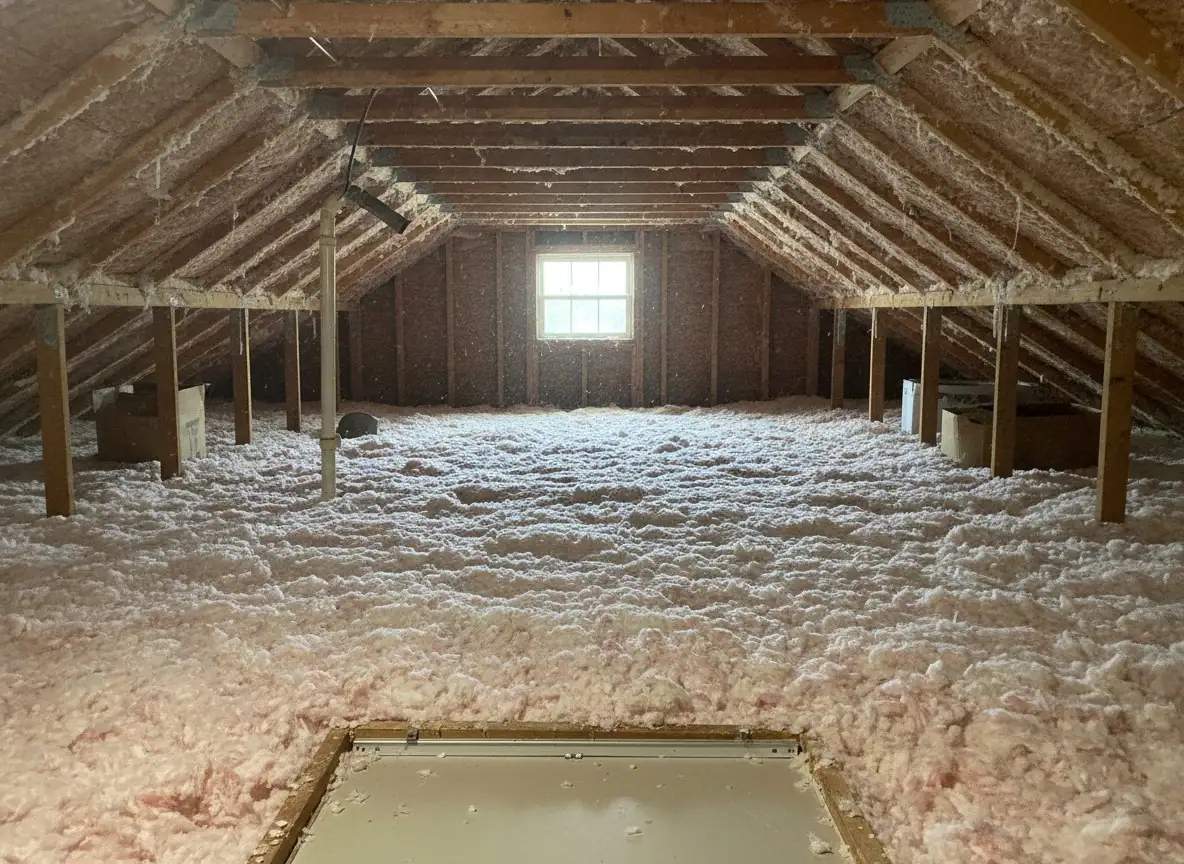
Blow-in insulation, also called loose-fill insulation, is made of small fibers or particles that a machine blows through a hose into attics, wall cavities, enclosed ceilings, and floors. Because the material is loose, it fills gaps around joists, studs, wiring, pipes, and junction boxes that batts tend to leave open. The installer feeds bags of material into a hopper. A blower fluffs it and pushes it through a long hose, and the installer places it at an even depth, or at a set density inside closed cavities.
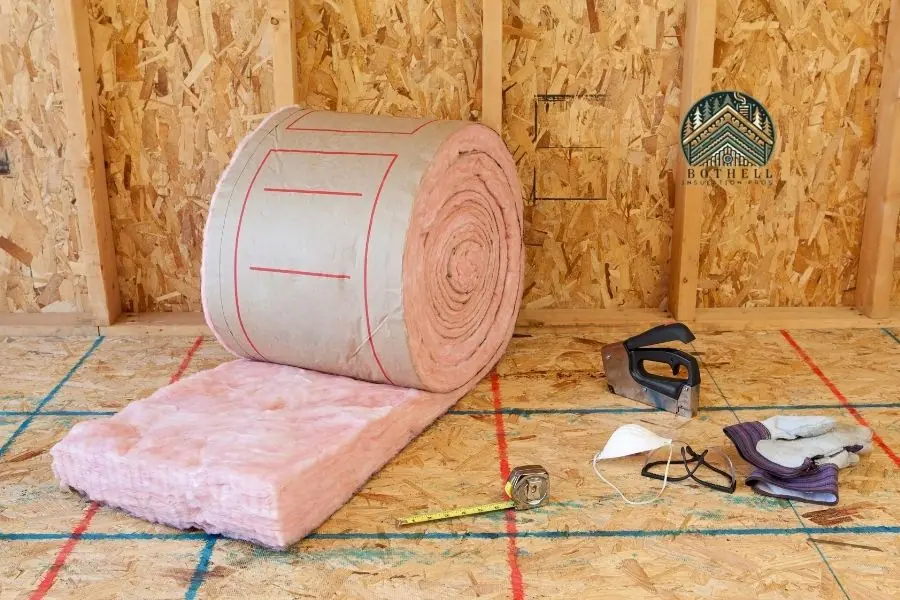
The three common materials are cellulose, fiberglass, and wool, either mineral wool (rockwool) or, less commonly, sheep's wool. Each one performs differently with moisture, settling, fire, and sound. Before choosing a material, it helps to confirm that your home actually needs more insulation.
Signs your Bothell home needs blow-in insulation
If you can see the tops of your attic floor joists, your home almost certainly needs more insulation. Current Washington energy code calls for roughly R-49 in the attics of new homes, which is well over a foot of loose fill. Many Bothell houses built from the 1950s through the 1980s have a fraction of that, and what's there has often been compressed by storage, foot traffic, or old roof leaks.
Other common signs include:
- Upstairs rooms that are noticeably colder in winter or hotter during summer heat waves than the rest of the house.
- Heating bills that seem high for the size of the home.
- Exterior walls that feel cold to the touch, especially in older homes that may have no wall insulation at all.
- Uneven, patchy, or discolored attic insulation, or insulation that has been disturbed by rodents.
- Condensation or frost on the underside of the roof sheathing. This often points to warm, moist indoor air leaking into the attic, which is common in our damp climate.
- Drafts around ceiling fixtures, attic hatches, and outlets on exterior walls.
If several of these sound familiar, the next decision is which material to use.
Free, no-obligation estimates
Talk to Bothell Insulation Pros
Tell us what you need and we’ll take it from there.
At a glance
What types of blow-in insulation are there: cellulose, fiberglass or rockwool?
The three main types of blown insulation are cellulose, fiberglass, and mineral wool (rockwool). All three can reach the R-value your attic needs, but they behave differently over time.
Blown-in cellulose insulation is made mostly from recycled paper fibers that have been treated with borate compounds to resist fire, insects, and mold. It is dense, packs tightly around obstructions, and dampens sound well. It is also the standard choice for dense-packing existing walls. Its weaknesses are settling and water. Cellulose settles more than the other materials, and if it gets soaked by a roof leak it can clump, lose R-value, and need to be replaced.
Blown-in fiberglass insulation is made from spun glass fibers, often with recycled glass content. It is lightweight, settles less than cellulose, and does not absorb water the way paper fibers do. Owens Corning blown-in insulation is one widely sold example. Fiberglass needs more depth than cellulose to reach the same R-value.
Blown-in rockwool insulation is made from basalt rock and steel slag spun into fibers. It resists settling, sheds water, and is naturally noncombustible. It also tends to cost more and can be harder to find in loose-fill form. Sheep's wool loose fill is a niche option that resists settling and manages moisture naturally. Some sheep's wool products are treated for insect resistance.
| Factor | Cellulose | Fiberglass | Rockwool (mineral wool) |
|---|---|---|---|
| Settling | Settles the most; installers blow it to the manufacturer's initial thickness to account for this | Settles less than cellulose | Minimal settling |
| Moisture | Absorbs water; can clump and lose R-value if wet | Does not absorb water; still loses performance if saturated | Water-repellent; drains and dries well |
| Fire treatment | Treated with borates to slow flame spread | Glass fibers are inherently noncombustible | Inherently noncombustible; very high melting point |
| Sound control | Very good due to density | Moderate | Very good |
| Best use | Dense-pack walls, attics where good sound control is wanted | Open attics, top-ups over existing insulation | Attics near heat sources, homeowners who prioritize fire and moisture resistance |
Fire behavior is one of the biggest differences among these materials, so it deserves a closer look.
Is blow-in insulation fire resistant?
Yes, all three common blow-in materials are designed to resist fire, but they get that resistance in different ways. Fiberglass and rockwool are mineral fibers that do not burn. Rockwool in particular tolerates very high temperatures before it melts, which is why mineral wool is also used for fire-stopping. Cellulose is made from paper, so manufacturers treat it with borate fire retardants. Those borates slow ignition and flame spread, and the same treatment also deters insects and mold.
Fire-resistant does not mean you can pile it anywhere. Ratings vary by product, so we follow the surface-burning and installation data published by each manufacturer on the bag and its technical data sheet. Building code and manufacturer instructions also require specific clearances. Insulation must be kept away from chimneys, flues, and recessed lights that are not IC-rated (approved for insulation contact). We build dams or covers around these hazards before any material goes in. Proper clearances are part of a careful installation, which is the subject of the next section.
How is blow-in insulation installed in an attic?
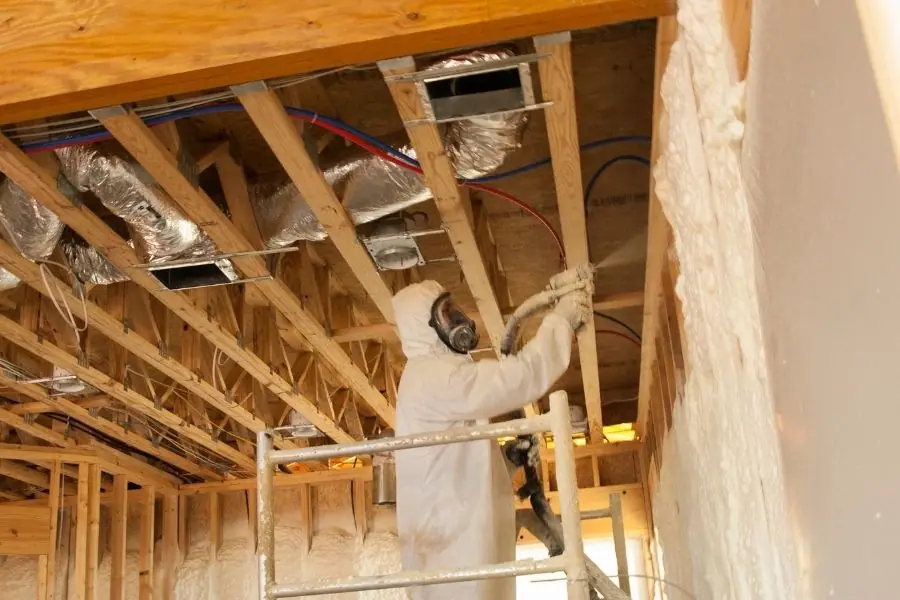
Blown-in attic insulation is installed by sealing air leaks first, protecting ventilation and heat sources, and then blowing material to a measured depth. Here's how we handle a typical Bothell attic:
- Inspect. We check existing insulation depth and condition, ventilation, roof decking for moisture or mold, wiring, rodent activity, and the location of fixtures and flues. From the square footage and your target R-value, we calculate the depth required and the number of bags, using the manufacturer's coverage chart.
- Remove if needed. Wet, moldy, or rodent-contaminated insulation should come out first. We provide old insulation removal when the existing material can't stay.
- Air seal. We seal top plates, plumbing and wiring penetrations, chases, and the attic hatch with foam, caulk, or rigid blocking. This keeps moist indoor air out of the attic.
- Install baffles and dams. Baffles at the soffits keep insulation from blocking the intake vents so the roof can breathe. We also build dams around the hatch and clearances around flues and non-IC lights.
- Blow. A truck- or trailer-mounted blower feeds material through the hose to the attic. We work from the far eaves back toward the hatch to keep coverage even.
- Verify depth. We check depth against rulers stapled to the framing, confirm the bag count against the coverage chart, and post an attic card that records the material, R-value, and installed thickness.
Read moreShow less
Homeowners can rent a blower and do this themselves. The material prices you see on retail shelves are DIY bag costs, though, not installed prices, and they don't include air sealing, baffles, safety clearances, or depth verification. You can learn more about our attic insulation installation service. Attics are the easy part, so many homeowners next ask about the walls.
Can you blow insulation into existing walls?
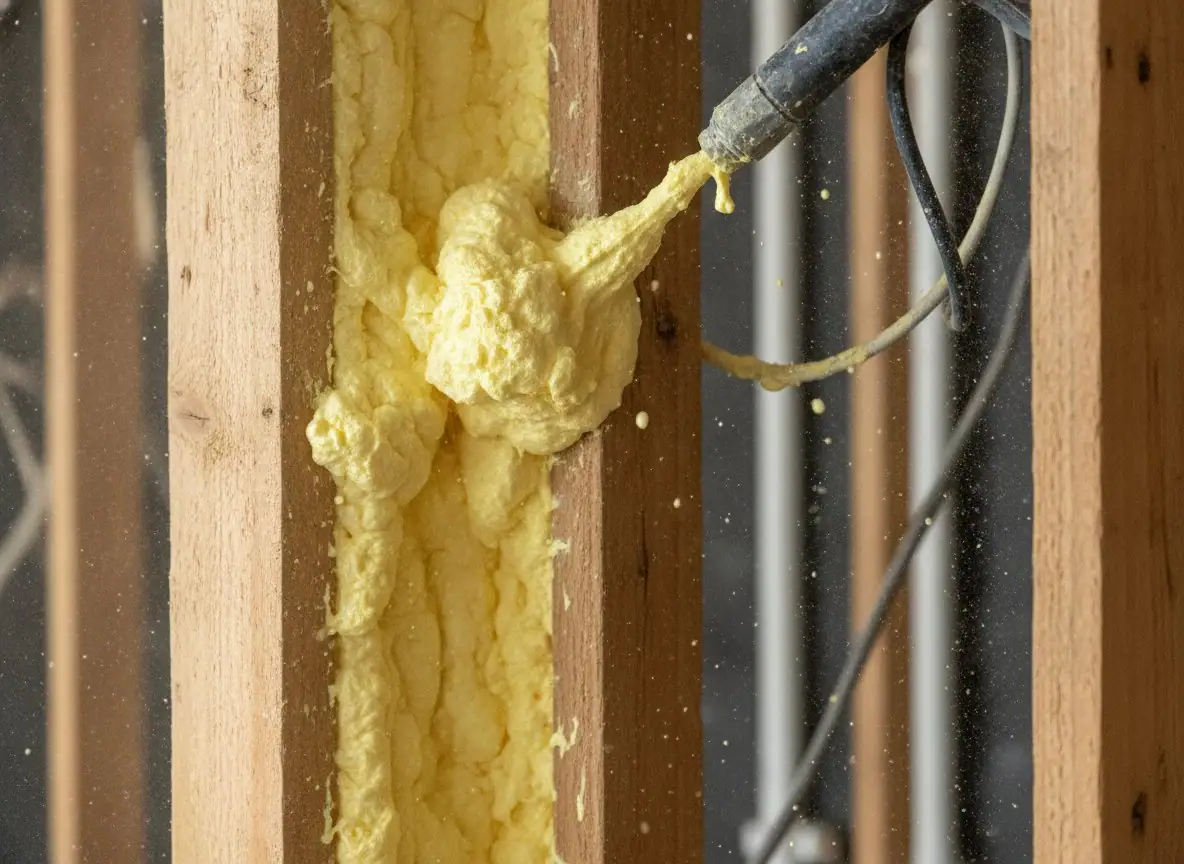
Yes, you can blow insulation into existing walls without removing drywall, using a method called drill-and-fill. We drill small holes into each stud bay, either from the outside after lifting or removing a course of siding, or from the inside through the drywall. Then we insert a fill tube and dense-pack the cavity, usually with cellulose. Dense-packing fills the bay tightly enough that the material resists settling and slows air movement through the wall. Afterward the holes are plugged and patched, or the siding is reinstalled.
Before blowing insulation into existing walls, we check for:
- Knob-and-tube wiring, which must be evaluated by an electrician and should not be buried in insulation.
- Fire blocking and horizontal framing that split cavities and need extra holes.
- Signs of moisture intrusion, such as failed siding or flashing, which must be fixed first.
- Existing partial insulation that may block the fill tube.
See our wall insulation page for more detail. Whether the cost and effort of insulating walls pays off depends on what's in them now.
Is it worth it to insulate exterior walls?
Insulating exterior walls is usually worth it when the walls are empty or nearly empty, which is common in Bothell homes built before the 1970s. An empty wall cavity loses heat quickly, and filling it improves comfort on every floor, not just the top one. Rooms with a lot of exterior wall area, such as corner bedrooms, see the clearest difference.
Walls that already have fiberglass batts give less return, because adding more material to a partly filled cavity is difficult. In that case, upgrading the attic and air sealing usually comes first. Wall projects are also a good time to consider blow in sound insulation for walls next to a busy street. Like any choice, though, blown insulation has tradeoffs you should weigh.

What are the downsides of blown-in insulation?
The main downsides of blown-in insulation are settling, moisture sensitivity (especially for cellulose), dust during installation, and the fact that it doesn't stop air leaks by itself. Here's an honest look at both sides:
Pros
- Fills irregular spaces and gaps around wiring and framing better than batts.
- Can be added over existing attic insulation in many cases.
- Can be installed into closed walls with minimal disruption.
- Cellulose and rockwool provide good sound dampening.
- Generally less expensive per R-value than spray foam insulation.
Cons
- Cellulose settles over time and must be blown deeper at first to compensate.
- Wet cellulose clumps and loses R-value, so roof leaks must be fixed before installation.
- Loose fill is not an air barrier on its own. Without air sealing, warm, moist air can still leak through it.
- Deep loose fill makes it harder to move around the attic or find wiring later.
- Installation is dusty, and the attic space can't be used for storage on top of the insulation.
- Wind-washing at the eaves can shift the material if baffles are missing.
Most of these drawbacks can be prevented with good prep, which brings us to whether it's worth the investment.
Is blown insulation worth it?
For most Bothell homes with under-insulated attics, blown insulation is worth it because it delivers a large comfort improvement for a moderate cost and little disruption. The value is highest when the existing attic layer is thin, the attic is accessible, and air sealing is done at the same time. In damp, cool Pacific Northwest weather, keeping heat in and moist indoor air out of the attic also protects the roof structure from condensation problems.
It's less worthwhile if the roof leaks, if the attic has active mold that hasn't been addressed, or if the attic is a cramped low-slope space where spray foam or insulation replacement makes more sense. Once you know it's a good fit, the next question is the price.
At a glance
How much does blow-in insulation cost in Bothell, Wa?
The cost of blow-in insulation in Bothell depends on the size of the area, the material, how much prep is needed, and how easy the space is to reach. We give a written quote after a free inspection rather than a generic number, because two homes with the same square footage can need very different work.
| Cost factor | How it affects the price |
|---|---|
| Area size | More square footage means more material and labor. |
| Target R-value | Reaching a higher R-value requires more depth and more bags. |
| Material | Cellulose, fiberglass, and rockwool are priced differently and need different depths. |
| Access and roof pitch | Low-pitch attics, small hatches, and tight eaves slow the work. |
| Removal of old insulation | Wet, moldy, or rodent-contaminated material must come out first. |
| Air sealing and baffles | The number of penetrations and soffit vents affects prep time. |
| Walls vs. attic | Drill-and-fill requires drilling, patching, and siding work. |
| Damage extent | Roof leaks or pest damage may need repair before insulating. |
| Permits | Some projects may require a permit, depending on scope. |
We offer financing to help spread out the cost. If insulation was damaged by a covered event such as a water leak, we can help you with the insurance claim process. Our blown-in insulation cost guide covers these factors in more depth. With pricing understood, the final step is choosing who does the work.
How do you choose a blow-in insulation company in Bothell?
Choose a blow-in insulation company that inspects before quoting, includes air sealing and baffles in the scope, and puts material, R-value, and depth in writing. When comparing blow in insulation companies, ask:
- Will you inspect the attic in person and check for moisture, mold, and rodents?
- Is air sealing included, or is it extra?
- How will you handle soffit vents, flues, and recessed lights?
- Which material do you recommend for my home, and why?
- What installed thickness and R-value will I end up with, and will you post an attic card?
- Are you insured?
Bothell Insulation Pros is insured and offers a full range of insulation services in Bothell, so we can recommend the right approach instead of pushing a single product. When you're ready to compare, start with an inspection.
Get a free blow-in insulation estimate
We provide free inspections and estimates for blow-in insulation throughout Bothell, WA. During the visit, we measure your current insulation, check for air leaks and moisture, and explain your options in plain language. Afterward, you get a written quote. Financing is available, we offer 24/7 emergency service for urgent problems such as water-damaged insulation, and we help homeowners with insurance claims. Call (425) 528-8317 or visit our contact page to work with a local Bothell insulation contractor.
FAQ
Frequently asked questions
How long does a blow-in insulation job take?
Most attic jobs take about a day, including air sealing and baffle installation. Projects that require old insulation removal or drill-and-fill wall work can take longer. We'll give you a time estimate with your quote.
Does blown-in insulation settle over time, and how is that accounted for?
Yes, especially cellulose. Manufacturers list both an initial installed thickness and a settled thickness for each R-value. We blow to the initial thickness so the insulation still meets the target R-value after it settles. Dense-packed walls are filled tightly enough to resist settling.
Can blow-in insulation be added over existing attic insulation?
Usually, yes, as long as the existing insulation is dry, clean, and free of mold or rodent contamination. If it's damaged, it should be removed first. We air seal before adding the new layer.
Is blown-in insulation good for soundproofing?
It reduces airborne noise, especially dense cellulose or rockwool in walls and ceilings, but it isn't full soundproofing. Blocking noise completely also requires mass, decoupled framing, and sealed gaps.
Does blow-in insulation help with moisture in damp Pacific Northwest homes?
Indirectly. Combined with air sealing, it keeps warm, moist indoor air from reaching cold roof sheathing, which reduces attic condensation. It doesn't fix leaks or ground moisture, though. Crawl space moisture is better handled with crawl space encapsulation.
Do I need to air seal before blowing in insulation?
Yes. Loose fill slows heat flow but lets air pass through it. Sealing penetrations and top plates first makes the insulation perform as rated and helps prevent moisture problems in the attic.
Ready to make your Bothell home warmer and more efficient? Call Bothell Insulation Pros at (425) 528-8317 for a free inspection.
Why choose us
Why choose Bothell Insulation Pros?
Free estimates
Get a clear, no-obligation estimate before any work begins.
Licensed & insured
Your property and our crew are protected on every project.
Residential & commercial
One team for homes, multi-family and commercial properties.
Locally owned & operated
A local team serving your community and the surrounding area.
Get in touch
Find insulation help near you
Request a free estimate online or give us a call — our team will follow up quickly.
- Call us(425) 528-8317
- Visit19125 N Creek Pkwy Ste 120 A, Bothell, WA 98011
- HoursMon-Sun: 7:00 am – 7:00 pm