Insulation Replacement in Bothell, WA
Insulation replacement means removing worn, damaged, or underperforming insulation and installing new material that meets today's energy standards. At Bothell Insulation Pros, we handle insulation removal and replacement for Bothell homes, mostly in attics and crawl spaces. Those two areas take the most abuse from our damp Pacific Northwest climate, and from rodents looking for a warm place to nest.
This page explains when replacement makes sense, how the work is done, which materials hold up, and what affects the price. Use it to make an informed decision before you book a free inspection.
What is insulation replacement?
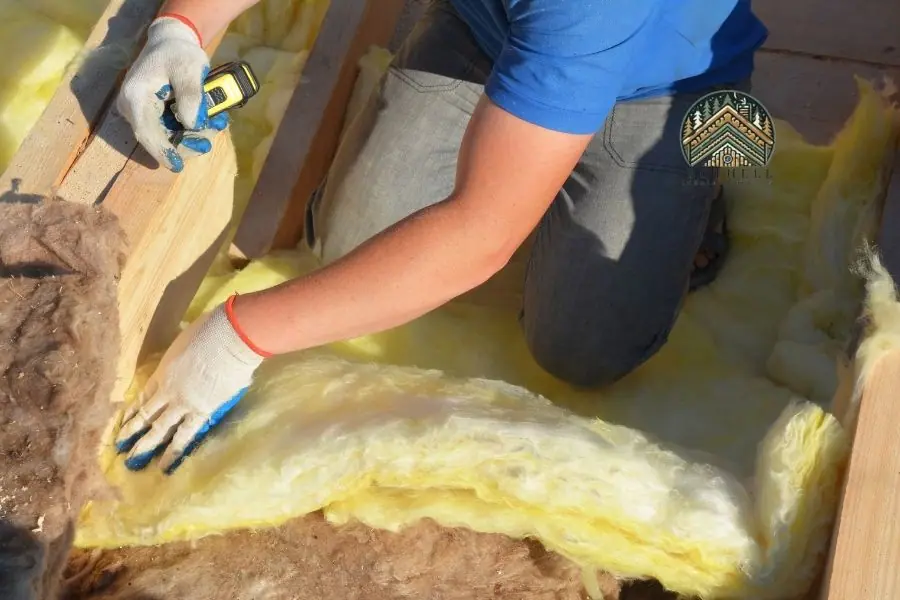
Insulation replacement is the process of taking out insulation that no longer does its job and putting in new insulation, usually with air sealing and repairs done in between. It is different from simply adding more insulation, because the old material is removed first. Removal gives the crew a clean surface to inspect, repair, and seal before the new insulation goes in.
In most Bothell homes, the work focuses on two areas:
- Attic insulation replacement, which removes old blown-in or batt insulation above the ceiling and installs new material to a higher R-value.
- Crawl space replacement, which pulls sagging or wet batts from between floor joists and reinsulates. It is often combined with a vapor barrier or full encapsulation.
Not every home needs a full tear-out, so it helps to know the signs that tell you replacement is due.
When does insulation need to be replaced?
Insulation needs to be replaced when it is wet, moldy, contaminated by pests, compressed, or so thin that it can no longer reach a useful R-value. Age alone is rarely the reason. Fiberglass and mineral wool can last for decades if they stay dry and undisturbed. Damage and settling are what end their useful life.
Pest, moisture, and damage signs checklist
- Rodent droppings, urine odor, tunnels, or nests in the attic or crawl space
- Insulation that is matted, flattened, or pulled apart in patches
- Water stains, dampness, or a musty smell after rain
- Visible mold on insulation, sheathing, or joists
- Crawl space batts hanging loose or lying on the ground
- Dark, dirty streaks in the insulation, which show air leaking through it
- Rooms that are hard to heat in winter or hot upstairs in summer
- Rising energy bills with no change in how you use the house
- Old vermiculite (gray-brown, pebble-like), which should be tested before anyone disturbs it
- Smoke or fire damage, or debris left behind by a past roof leak
If you see one or more of these signs, the next decision is whether to remove what's there or build on top of it.
Free, no-obligation estimates
Talk to Bothell Insulation Pros
Tell us what you need and we’ll take it from there.
At a glance
Should you remove old insulation or add new on top?
You should add new insulation on top only when the existing layer is clean, dry, and evenly spread. If it is contaminated, wet, or hiding air leaks, remove it first. Adding new material over damaged insulation buries the problem and can trap moisture and odors.
| Condition of existing insulation | Recommended approach | Why |
|---|---|---|
| Dry, clean, evenly spread but too thin | Add on top | The old layer still contributes R-value |
| Rodent droppings, urine, or nests | Remove and replace | Contamination, odor, and health concerns |
| Wet or water-stained | Remove, fix the leak, then replace | Wet insulation loses R-value and feeds mold |
| Moldy | Remove and replace after the source is corrected | Mold spreads and cannot be cleaned out of loose fibers |
| Compressed or scattered from past work | Usually remove and replace | Hard to level and air seal underneath |
| Major air leaks around lights, chases, and top plates | Remove, air seal, then install | Sealing is far easier on a cleared surface |
| Suspected vermiculite | Test first, then decide | May require special handling |
When removal is the right call, the attic work follows a set sequence.
How is attic insulation removed and replaced?
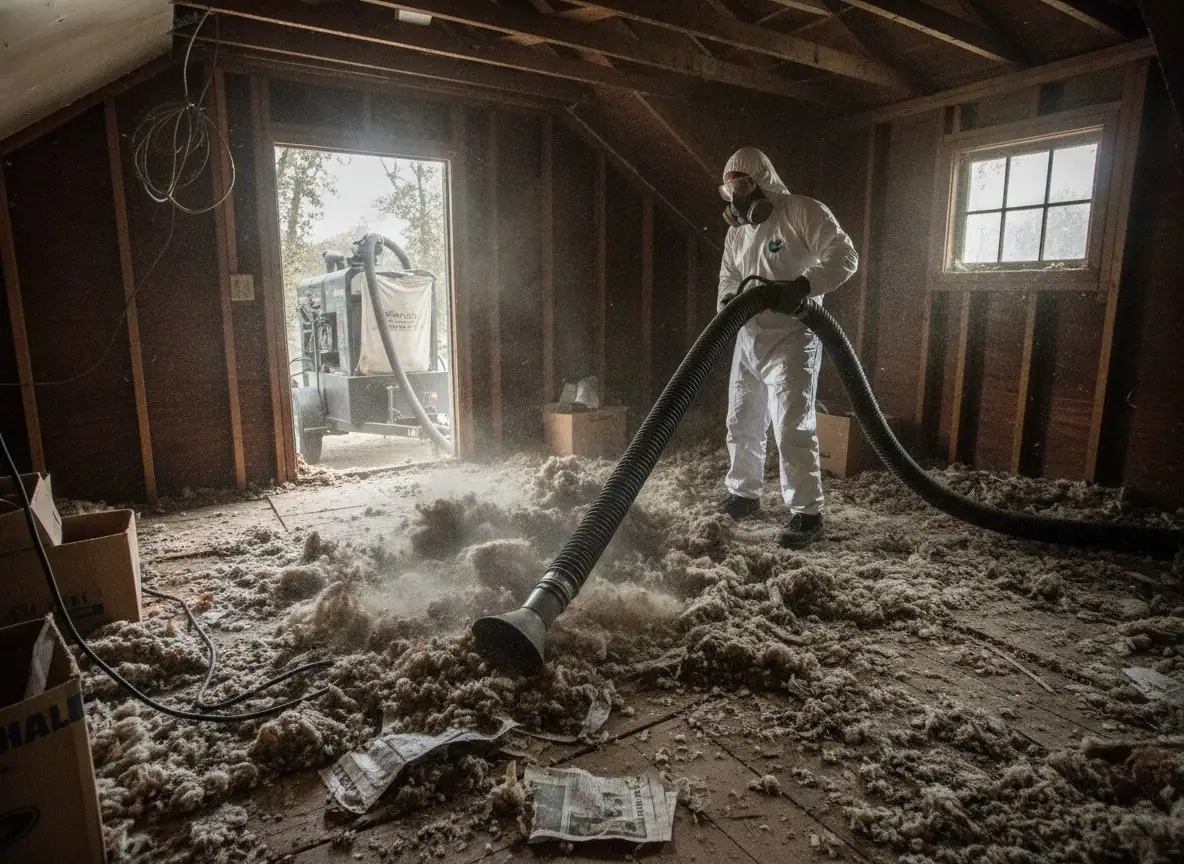
Attic insulation is removed with a high-powered vacuum system that sends the old material through a hose into collection bags outside. The attic is then repaired, air sealed, and reinsulated. A typical attic insulation removal and replacement project goes like this:
- Inspect. We check insulation depth and condition, look for pest activity, moisture, and roof leaks, check ventilation, and note any bath fans that vent into the attic.
- Remove. We protect the living space, then vacuum loose fill and bag batts. The material leaves the attic without passing through your rooms.
- Repair and air seal. We clean up droppings, close rodent entry points we can reach from inside, and seal gaps around top plates, wiring holes, plumbing stacks, recessed lights, and the attic hatch. Baffles go in at the eaves to keep soffit vents open.
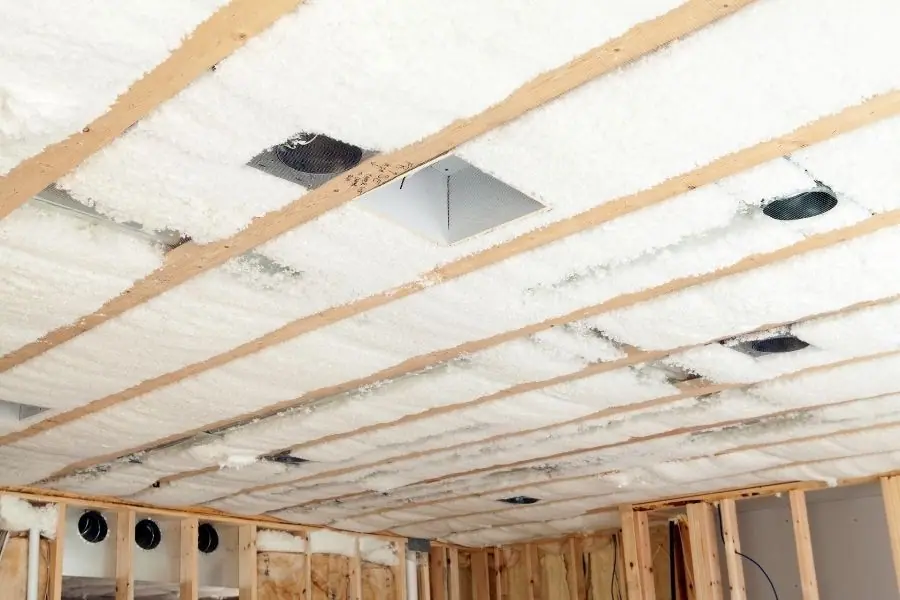
- Install. We install new blown-in insulation, batts, or spray foam to the target depth. Depth markers go in so the level can be checked later.
- Verify R-value. We measure depth across the attic, confirm it meets the planned R-value, and walk you through the results.
You can learn more about each stage on our attic insulation removal and attic insulation installation pages. Crawl spaces follow a similar idea, with a few important differences.
How do you replace insulation in a crawl space?
To replace insulation in a crawl space, remove the failed batts from the floor joists, correct the moisture source, and install new insulation that is properly supported or sealed in place. Crawl spaces in Bothell stay damp much of the year. Paper-faced fiberglass held up only by friction tends to absorb moisture, sag, and fall within a few years.
A sound crawl space replacement usually includes:
- Bagging and removing old batts and any debris or rodent waste
- Laying a ground vapor barrier, or full encapsulation that seals the walls and floor
- Installing new floor insulation with wire supports or netting so it stays tight to the subfloor
- Choosing between two strategies: insulate the floor and keep the space vented, or encapsulate and insulate the foundation walls instead
- Sealing rim joists, often with spray foam
See our crawl space insulation page for details on each approach. The material you choose matters in any area exposed to moisture or outside air, which leads to the broader question of what works best there.
At a glance
What is the best insulation for outside walls and exposed areas?
For exposed or moisture-prone areas, closed-cell spray foam and mineral wool (rockwool) usually perform best. For open attic floors, blown-in insulation is usually the most practical choice. Each material has a place.
| Material | Best uses | Strengths | Limitations |
|---|---|---|---|
| Blown-in (fiberglass or cellulose) | Open attic floors, closed wall cavities (dense-pack) | Fills around obstructions, reaches high R-values cost-effectively | Can settle; not suited to wet areas |
| Fiberglass batts | Open walls, floors, accessible attics | Widely available, simple to install | Gaps and compression reduce performance; sags when damp |
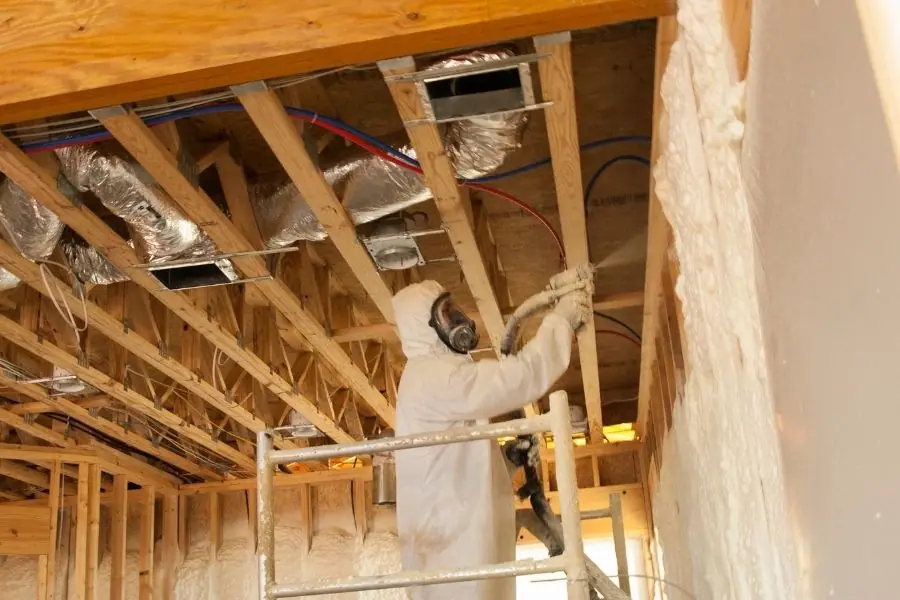
| Spray foam (open- or closed-cell) | Rim joists, crawl space walls, rooflines, exterior walls during remodels | Air seals and insulates in one step; closed-cell resists moisture | Higher material cost; needs a professional crew |
| Rockwool (mineral wool) | Walls, floors, areas needing fire or sound resistance | Moisture-tolerant, fire-resistant, holds its shape | Heavier and pricier than fiberglass batts |
Read more about spray foam insulation if air sealing is a priority. Knowing the best material raises a practical question for many older homes: can you even get insulation into finished exterior walls?
Can I add insulation to my exterior walls?
Yes, you can add insulation to exterior walls without tearing them open. The usual method is to drill small holes and dense-pack blown-in insulation into each cavity. During a remodel or siding replacement, open walls can instead receive batts, rockwool, or spray foam.
Before any wall work, it helps to check for knob-and-tube wiring, fire blocking that divides cavities, and signs of moisture in the wall. Our wall insulation page covers these options. Whatever goes into walls and floors, Bothell homeowners often ask whether it will stand up to rodents.
Do mice chew through rockwool insulation?
Mice don't eat rockwool, but they can still tunnel through it and nest in it, so it is not a rodent barrier on its own. It is less appealing than some materials because it is dense and doesn't make good nesting fluff. That still won't stop a determined mouse.
Real pest protection comes from:
- Sealing entry gaps at foundation vents, utility penetrations, and rooflines
- Removing contaminated insulation so odors don't attract new rodents
- Working with a pest control company to clear active infestations before reinsulating
With material choices settled, the next question is how long the project will disrupt your home.

How long does insulation replacement take?
Most attic or crawl space insulation replacement projects take one to two days of on-site work. Larger homes, heavy contamination, or combined attic and crawl space jobs can take longer. A rough breakdown:
- Removal: often a half day to a full day, depending on depth and how easy the space is to get into
- Cleanup, repairs, and air sealing: a few hours to a day
- New installation: blown-in attics often go quickly; spray foam and encapsulation take more time
Most families stay in the home during the work. We give you a project-specific timeline after the inspection. Time and labor are also tied closely to what the job costs.
At a glance
How much does insulation replacement cost in Bothell, Wa?
Insulation replacement cost in Bothell depends mainly on the material you choose and whether the old insulation has to be removed first. National per-square-foot averages published online vary widely for exactly those reasons. We give every homeowner a written quote after a free inspection rather than a generic number.
| Cost factor | How it affects price |
|---|---|
| Square footage | More area means more material and labor |
| Material type | Blown-in is generally the most economical; spray foam is at the higher end |
| Target R-value | Greater depth requires more material |
| Tear-off of old insulation | Removal, bagging, and disposal add labor |
| Contamination or damage extent | Rodent waste, mold, or water damage add cleanup and repair |
| Access and roof pitch | Low-slope attics and tight crawl spaces slow the work |
| Air sealing and ventilation work | Baffles, sealing, and fan venting add scope |
| Vapor barrier or encapsulation | Crawl space moisture control adds material and labor |
| Permits or testing | Some projects or suspect materials require them |
For more detail, see our insulation cost guides, including attic insulation costs and removal costs. If budget is tight, it's fair to ask where the savings are.
What's the cheapest way to do insulation?
The cheapest effective approach is usually air sealing plus blown-in insulation over existing material that is still clean and dry. This skips removal costs and uses the most economical material.
Ways to keep costs reasonable without cutting corners:
- Remove only what is damaged when the rest of the attic is sound
- Put the attic first, since it is typically the biggest source of heat loss
- Combine attic and crawl space work into one visit when both need attention
- Avoid covering wet or contaminated insulation, which leads to paying twice later
When the damage came from a sudden event, insurance may cover some of the cost.
Does insurance or financing help with replacement?
Insurance may cover insulation replacement when the damage comes from a covered event such as a burst pipe, roof leak, or fire. It typically won't cover gradual wear or long-term pest problems. We help homeowners with insurance claims by documenting conditions with photos, describing the damage, and providing a written scope of work for your adjuster.
We also offer financing for homeowners who would rather spread out payments. And because water and storm damage don't wait for business hours, we provide 24/7 emergency service when soaked insulation needs to come out quickly to limit mold and ceiling damage. Whether you pay through insurance, financing, or out of pocket, choosing the right contractor matters most.
How do you choose an insulation replacement contractor?
Choose an insulation replacement contractor who inspects before quoting, explains removal versus add-on honestly, and puts materials, R-values, and scope in writing. Before you compare quotes, know your approximate square footage so every estimate is based on the same numbers.
- Get more than one quote and compare the same materials and R-values
- Ask whether air sealing, baffles, and cleanup are included
- Confirm how old material will be removed and disposed of
- Ask how the contractor verifies final depth and R-value
- Confirm insurance coverage and ask about licensing
You can browse our full insulation services in Bothell, view past work in our gallery, or read reviews before you decide. The simplest next step is to get an inspection and quote in hand.
Get a free replacement estimate
Bothell Insulation Pros offers free inspections and written estimates for attic and crawl space insulation replacement. We'll check what you have now, tell you whether removal is necessary, and recommend materials and R-values that fit your home and budget. Call (425) 528-8317 or reach us through our contact page. For water or storm damage, our 24/7 emergency service is available.
FAQ
Frequently asked questions
How much is insulation for a 1500 sq ft house?
The cost depends on which areas are being insulated, the material, the target R-value, and whether old insulation must be removed. A 1,500 sq ft house might need only an attic top-up, or it might need full attic and crawl space replacement, and those are very different projects. We provide a written quote after a free inspection.
How much to replace loft (attic) insulation?
Attic replacement pricing is driven by attic size, how easy it is to access, whether tear-off and cleanup are needed, air sealing scope, and the material chosen. Blown-in is usually the most economical option for open attic floors. Our attic cost guide explains these factors in more detail.
How often should insulation be replaced?
There's no fixed schedule. Dry, undisturbed fiberglass or mineral wool can last for decades. Replace insulation when it becomes wet, moldy, contaminated by pests, or compressed below a useful depth.
Can wet or moldy insulation be saved?
Generally, no. Wet insulation loses much of its R-value, and mold can't be reliably cleaned out of fibrous material. The moisture source should be fixed, the affected insulation removed, and the area dried before new insulation goes in.
Is replacing insulation worth it for energy bills?
It often is, especially when the old insulation is thin, damaged, or sitting over major air leaks. The combination of air sealing and proper depth is what reduces heat loss, and many homeowners also notice steadier temperatures from room to room.
What R-value should replacement insulation have?
For Bothell's climate, current Washington energy code guidance for new work calls for roughly R-49 in attics and R-30 in floors over crawl spaces. We'll confirm the right target for your home during the inspection.
Ready to find out what your attic or crawl space needs? Call Bothell Insulation Pros at (425) 528-8317 for a free inspection.
Why choose us
Why choose Bothell Insulation Pros?
Free estimates
Get a clear, no-obligation estimate before any work begins.
Licensed & insured
Your property and our crew are protected on every project.
Residential & commercial
One team for homes, multi-family and commercial properties.
Locally owned & operated
A local team serving your community and the surrounding area.
Get in touch
Find insulation help near you
Request a free estimate online or give us a call — our team will follow up quickly.
- Call us(425) 528-8317
- Visit19125 N Creek Pkwy Ste 120 A, Bothell, WA 98011
- HoursMon-Sun: 7:00 am – 7:00 pm